How a Cruise Ship’s Pace Shifts From Day to Night
A cruise ship can feel like two completely different places within the same 24 hours. We may wake up to calm decks and quiet hallways, then step out after sunset into a ship that feels louder, busier, and more energized. This shift is not accidental. What changes most on a cruise ship from daytime to nighttime is the overall pace and that change shapes how we experience everything onboard.
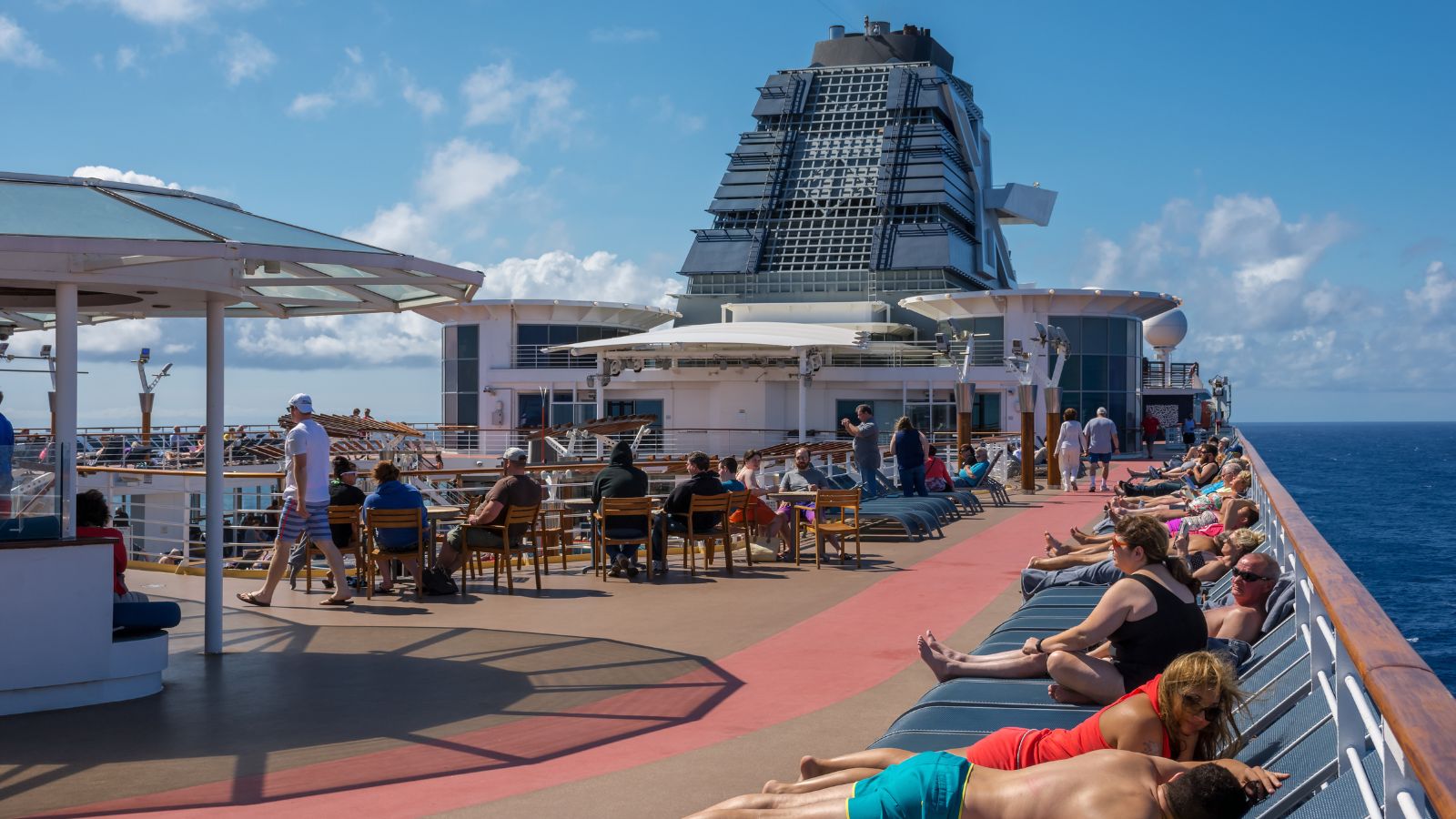
During the day, cruise ships are designed around openness and ease. On sea days in places like the Caribbean or the Mediterranean, decks are filled with loungers, pools, and passengers moving at an unhurried rhythm. Activities are spread out, with trivia games, spa appointments, and casual dining happening simultaneously. Noise exists, but it is diffuse. The goal is relaxation. We are encouraged to slow down, enjoy the view of open water, and let time stretch.
At night, the ship contracts. As the sun sets, activity funnels inward. Passengers move from open decks into theaters, dining rooms, lounges, and casinos. Lighting changes dramatically, replacing sunlight with warm, focused interiors. Music becomes more prominent. Schedules tighten. Dinner reservations, showtimes, and events create a sense of urgency that does not exist during the day.
This shift in pace affects how crowded the ship feels. Even though the number of passengers stays the same, nighttime feels busier because everyone is moving toward the same spaces at the same time. Elevators fill faster. Hallways feel tighter. Popular venues on ships sailing out of ports like Miami or Barcelona often reach capacity quickly after dark. The ship has not changed size, but our movement patterns have.
Energy levels change as well. Daytime allows for personal choice and flexibility. Nighttime creates a shared momentum. We are more aware of other passengers, more stimulated by sound and light, and more likely to feel either excited or overwhelmed depending on our expectations. This is why nighttime can feel exhilarating for some and exhausting for others.

Understanding this single shift, the change in pace helps us navigate cruises better. Planning quieter dinners, attending earlier shows, or stepping onto the deck at night instead of into a crowded lounge can restore balance. Likewise, saving energy during the day makes nighttime feel enjoyable rather than draining.
A cruise ship does not transform because of the clock alone. It transforms because of how we are guided to use space and time differently. Recognizing how daytime calm gives way to nighttime intensity allows us to choose how we want our cruise to feel, hour by hour.
